What Colors Go With Green? 10 Easy Combinations for Outfits, Rooms and More
What colors go with green? See 10 green color combinations with hex codes, plus outfit and room ideas, colors to avoid and the 60-30-10 rule.
The colors that go with green best are cream, camel, burgundy, mustard yellow, blush pink, navy, terracotta and crisp white. Warm neutrals make green feel calm and grounded, burgundy and pink add rich contrast, and navy keeps things polished. Pick one partner, add a neutral, and green almost always looks intentional.
The Short Answer: 8 Colors That Go With Green
If you just need a quick list of what color goes with green, start here:
- Cream #F5ECD6: soft, warm and easy with every green
- Camel #C19A6B: the natural partner for deep and olive greens
- Burgundy #800020: rich contrast without shouting
- Mustard Yellow #D4A72C: warm, autumnal and cheerful
- Blush pink #E8B4B8: a softer take on green’s complement
- Navy #1F2A44: classic, calm and a little preppy
- Terracotta #C8653E: earthy and warm, great for olive greens
- Crisp white #FFFFFF: clean and fresh with bright greens
The examples below use Forest Green #228B22, a deep, natural green like a dense forest canopy. It is a classic for autumn, plaid and traditional interiors, and its proven partners are burgundy, cream, camel and mustard. Most ideas also work with emerald, hunter and olive.
10 Green Color Combinations That Work
1. Forest Green and Cream
Cream softens deep green and keeps it from feeling heavy. This is the easiest combination for a living room with cream walls and green upholstery, or an outfit with a green sweater over cream trousers.
2. Forest Green and Burgundy
Burgundy is a deep, muted relative of red, green’s complement, so the pair has contrast that still feels refined. Think tartan, a library with burgundy leather chairs, or a fall wedding with green velvet and burgundy florals. Cream keeps it from feeling too dark.
3. Green and Camel
Camel and green both feel natural, like leaves and wood. A camel coat over a green knit is a timeless outfit, and in a room, camel leather with green walls feels warm and lived in.
4. Green and Mustard Yellow
Mustard brings sunshine to green without the brightness of lemon yellow. It works well for autumn outfits, kids’ rooms and branding that wants to feel friendly and grounded.
5. Green and Blush Pink
Pink is a lighter cousin of red, so it tends to play off green naturally. Blush pink keeps the contrast gentle, which makes this a favorite for spring weddings, bedrooms and modern brands.
6. Green and Navy
Green and navy are fairly close neighbors on the color wheel, so they tend to feel calm and cohesive. Try a navy blazer with a green tie or scarf, or navy cabinets with green accents in a kitchen.
7. Olive Green and Terracotta
Olive and terracotta look like a Mediterranean garden. This pairing shines in living rooms with clay pots, rust cushions and plants, and in relaxed summer outfits.
8. Green and Charcoal Gray
Charcoal gives green a modern, tailored edge. Use it for an office, a minimalist brand identity, or a gray suit with a green pocket square.
9. Green, White and Gold
White makes green look crisp, and gold adds warmth and polish. It is a classic wedding palette and a smart choice for upscale branding.
10. Tonal Greens
Layering several greens of the same warmth creates depth without contrast. Mix forest green textiles with olive and sage walls for a calm, botanical room.
For more ideas built around any shade, try our color matcher.
What Colors Go With Green in Clothing
Green is more wearable than many people expect. A few practical tips:
- Start with neutrals. Cream, camel, tan, brown, navy and denim blue all make green look easy. A green sweater with jeans and camel boots is hard to get wrong.
- Add one accent. Burgundy, mustard or blush pink each give green a little energy. Keep the accent to one piece, like a bag or scarf.
- Match the warmth. Warm greens like olive and forest tend to look best with warm partners (camel, rust, gold). Cooler greens like emerald often sit better with navy, white, silver and cool pink.
- Consider your coloring. Some greens flatter one person more than another. If you are unsure whether warm or cool greens suit you, our undertone test is a quick place to start.
If you love brown with green, our guide on what colors go with brown has more warm pairings.
What Colors Go With Green in Home Decor
Green walls and furniture feel natural in almost any room because they echo plants and the outdoors. Pair green with warm wood, cream textiles and brass for a traditional feel, or with white, black and light oak for something more modern.
If you want a green paint near forest green, these are the closest matches in our data. All four are softer, more olive than pure forest green, which often makes them easier to live with on walls.
| Paint | Hex | Estimated LRV | Character |
|---|---|---|---|
| Sap Green (Farrow & Ball No. W56) | #6E7440 | about 16.2 | Deep olive, moody |
| Calke Green (Farrow & Ball No. 34) | #6F7757 | about 17.3 | Muted, earthy green |
| Jojoba (Behr) | #7C8564 | about 22 | Soft, gray-leaning green |
| Yeabridge Green (Farrow & Ball No. 287) | #7F8B5E | about 23.8 | Lighter, fresher olive |
All of these are clear colors, not neutrals, so they will read as green on the wall. The low LRVs mean they absorb a lot of light: Sap Green and Calke Green suit cozy dens, dining rooms and studies, while Jojoba and Yeabridge Green are more forgiving in rooms with average light. Pair any of them with cream trim, camel or terracotta accents and natural wood.
Screen colors are only approximations, so always test a physical sample on your own wall in morning and evening light before committing. You can browse more options in our paint colors by brand.
Colors to Avoid With Green
Green is flexible, but a few pairings can go wrong:
- Bright red in equal amounts. Pure red and pure green at the same strength tend to look like holiday decor. Use burgundy instead, or keep red as a small accent.
- Clashing greens. A yellowish lime next to a bluish emerald can make both look off. Keep greens in the same warmth family.
- Too many brights. Bright green plus hot orange plus electric purple usually feels chaotic. Pick one bright and let neutrals do the rest.
- Muddy browns next to muddy greens. Very similar dull tones can look flat. Add contrast with cream, white or a rich accent.
How to Use the 60-30-10 Rule With Green
The 60-30-10 rule keeps green color combinations balanced. One color covers about 60 percent of the space or outfit, a second covers about 30 percent, and an accent covers about 10 percent.
Green as the main color (60): green walls, cream sofa and rugs (30), burgundy or mustard pillows and art (10). This feels bold but cozy.
Green as the supporting color (30): cream walls (60), green sofa or cabinets (30), camel or brass accents (10). This is the easiest way to try green at home.
Green as the accent (10): navy and white room or outfit (60 and 30), with green plants, a green scarf or a green chair as the 10. Low risk and very fresh.
For outfits, the same idea works: 60 percent might be your trousers and coat, 30 percent your sweater, 10 percent your shoes or bag.
The Many Shades of Green
There is no official list, but these shades come up most often: forest #228B22, emerald #50C878, olive #808000, sage #9CAF88, mint #98FF98, lime #32CD32 and hunter #355E3B. Deep shades pair with rich, warm partners; light shades like sage and mint pair with white, blush and soft gray. See more named shades in our Forest Green page and its related colors.
Matching a Green You Already Have
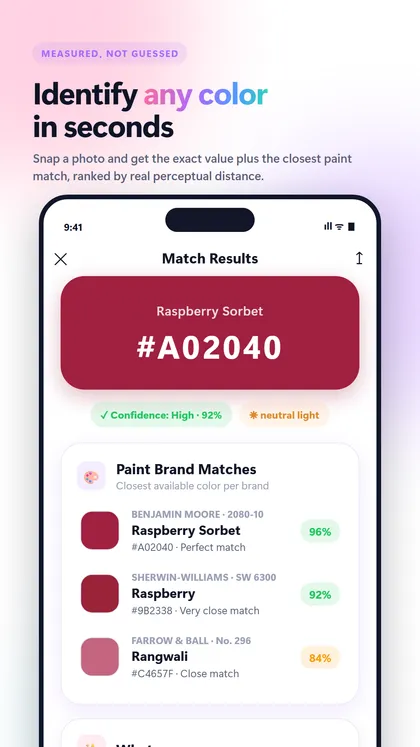
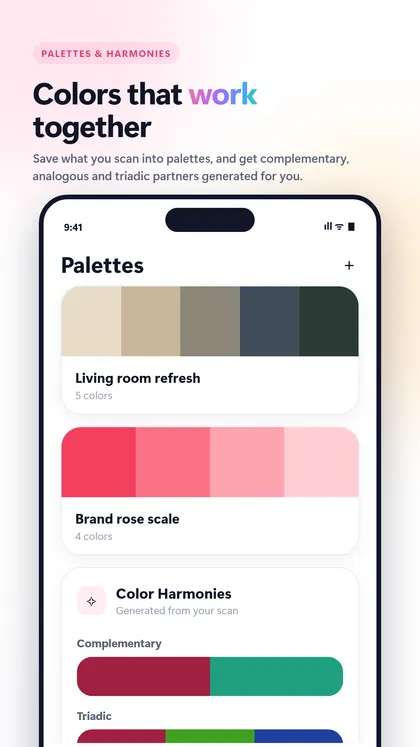
If you are trying to pair something green you already own, like a sofa, a dress or a leafy wallpaper, it helps to know the exact shade. ColorScan, a separate app from the makers of this site, identifies any color from a photo or the live camera and gives its HEX value, a name and the closest paint matches from Benjamin Moore, Sherwin-Williams, Behr and Farrow & Ball collections. It also shows color harmonies like complementary and analogous, which makes finding partners easier. It is on Android now, with iOS coming. Like any screen tool, it gives approximations, so confirm paint with a physical sample.
When you have your shade, pair it with burgundy, cream, camel or mustard and you are already most of the way there.
FAQ
What color goes best with green?
Cream and camel are the safest partners because they make almost any green look calm and natural. For more contrast, burgundy and blush pink work beautifully since they are softer relatives of green's complement, red.
What color room is best for anxiety?
Soft greens, muted blues and warm neutrals are often described as calming because they feel restful and echo nature. Choose low-contrast palettes, like a muted green with cream, and avoid very saturated brights if you want a relaxing space.
What color should you not paint your bedroom?
Very saturated reds, oranges and neon shades tend to feel energizing, which many people find too stimulating for sleep. That said, it is personal, and a deep, muted color like an olive green can feel cozy rather than loud.
What is Gen Z's favorite color?
There is no single reliable answer, since tastes vary widely. Soft greens like sage have been popular in fashion and decor, and they pair easily with cream, blush pink and warm wood.
Does green go with gray?
Yes. Charcoal gray gives green a modern, tailored look, while light gray keeps pale greens like sage fresh. Match the warmth: warm greens look best with warm grays, and cool greens with cool grays.
Keep exploring
- Color combinations What Colors Go With Brown? 10 Easy, Warm Combinations for Outfits and Rooms Wondering what colors go with brown? See 10 brown color combinations with hex codes, plus tips for outfits, rooms, paint and colors to avoid.
- Color combinations What Colors Go With Red? 10 Easy Combinations for Outfits, Rooms and More What colors go with red? See 10 red color combinations with hex codes, outfit and room ideas, matching red paint picks and the shades to avoid.
- Color combinations What Colors Go With Yellow? 10 Combinations for Outfits, Rooms and More What colors go with yellow? See 10 yellow color combinations with hex codes, plus outfit, room and paint ideas, colors to avoid and the 60-30-10 rule.
Recommended app · ColorScan
Identify any color with your camera
ColorScan tells you the exact color of a wall, a sweater or a lipstick, its name and the closest paint colors from Benjamin Moore, Sherwin-Williams, Behr and Farrow & Ball.
- Identify any color from a photo or the live camera
- Closest matches from Benjamin Moore, Sherwin-Williams, Behr and Farrow & Ball
- HEX, RGB, HSL, CMYK and LAB in one tap
- Color harmonies and palettes from any shot